Melanie Terasaki
I have always been drawn to paper. As a child, books were my portals to the world. Before the internet, I turned to dictionaries and encyclopedias when I wanted to understand something, and to novels when I wanted to imagine somewhere else. That early love of books continues to shape my work today, although my books are often less about what they contain and more about what they can become.
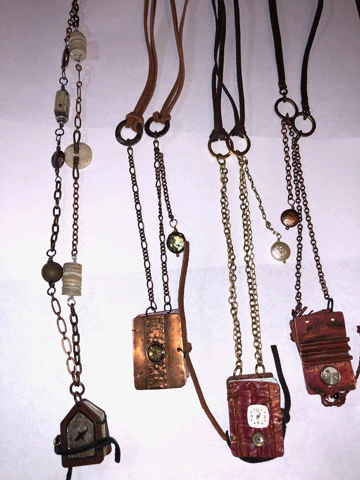
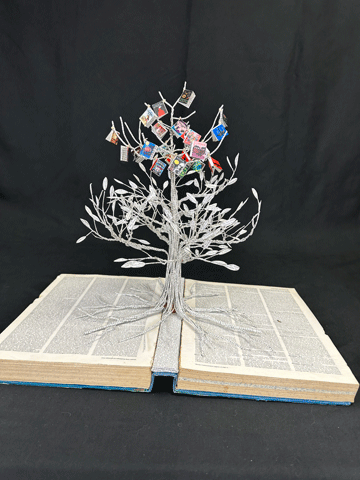
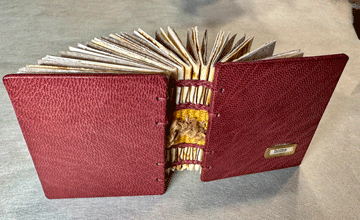
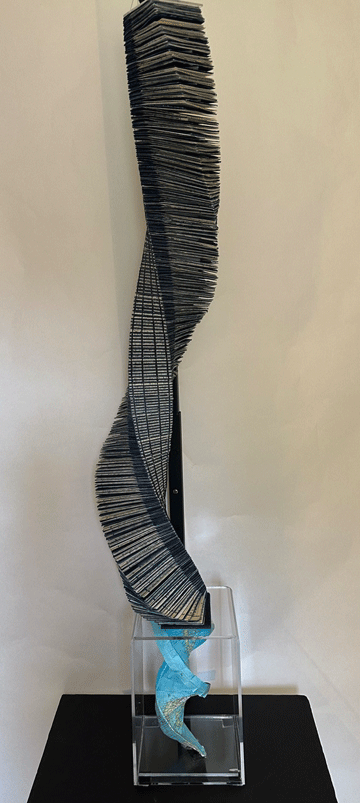
I love making books in many forms—books that may not look or function like conventional books. I am particularly interested in the book as a structure: its folds, layers, pages, sequence, movement, and physical presence. I enjoy taking apart the familiar idea of a book and reimagining it as an object that can be explored visually and tactilely. For me, the architecture of the book can be as meaningful as its content.
My Japanese heritage also influences the way I approach materials and making. I am drawn to simplicity, handwork, repetition, and the quiet beauty of imperfection. The Japanese aesthetic of wabi-sabi resonates deeply with me—the acceptance of impermanence, irregularity, and the traces that time leaves behind.
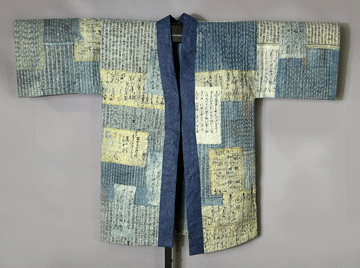
Paper is my constant collaborator. I love old and discarded papers for the stories they already carry: worn edges, creases, fading, and unexpected marks. Rather than hiding these imperfections, I often build them into the work, allowing the material’s history to remain visible.
Making books brings together my curiosity, my love of paper, and my fascination with transformation. I see each book as an opportunity to explore structure, memory, and possibility—and to discover how many different things a “book” can be.